Dehydrated Onion vs Fresh Onion: Which is Better for Food Processing?
In the food processing industry, choosing the right form of ingredients can significantly impact product quality, cost efficiency, and operational performance. One of the most common comparisons manufacturers face is between dehydrated onion and fresh onion.
While both have their place, dehydrated onion is increasingly becoming the preferred choice for large-scale food production. Let’s explore how they compare across key factors.
What is the Difference?
-
Fresh Onion: Raw onion with high moisture content (~80–85%), requiring cleaning, peeling, and cutting before use.
-
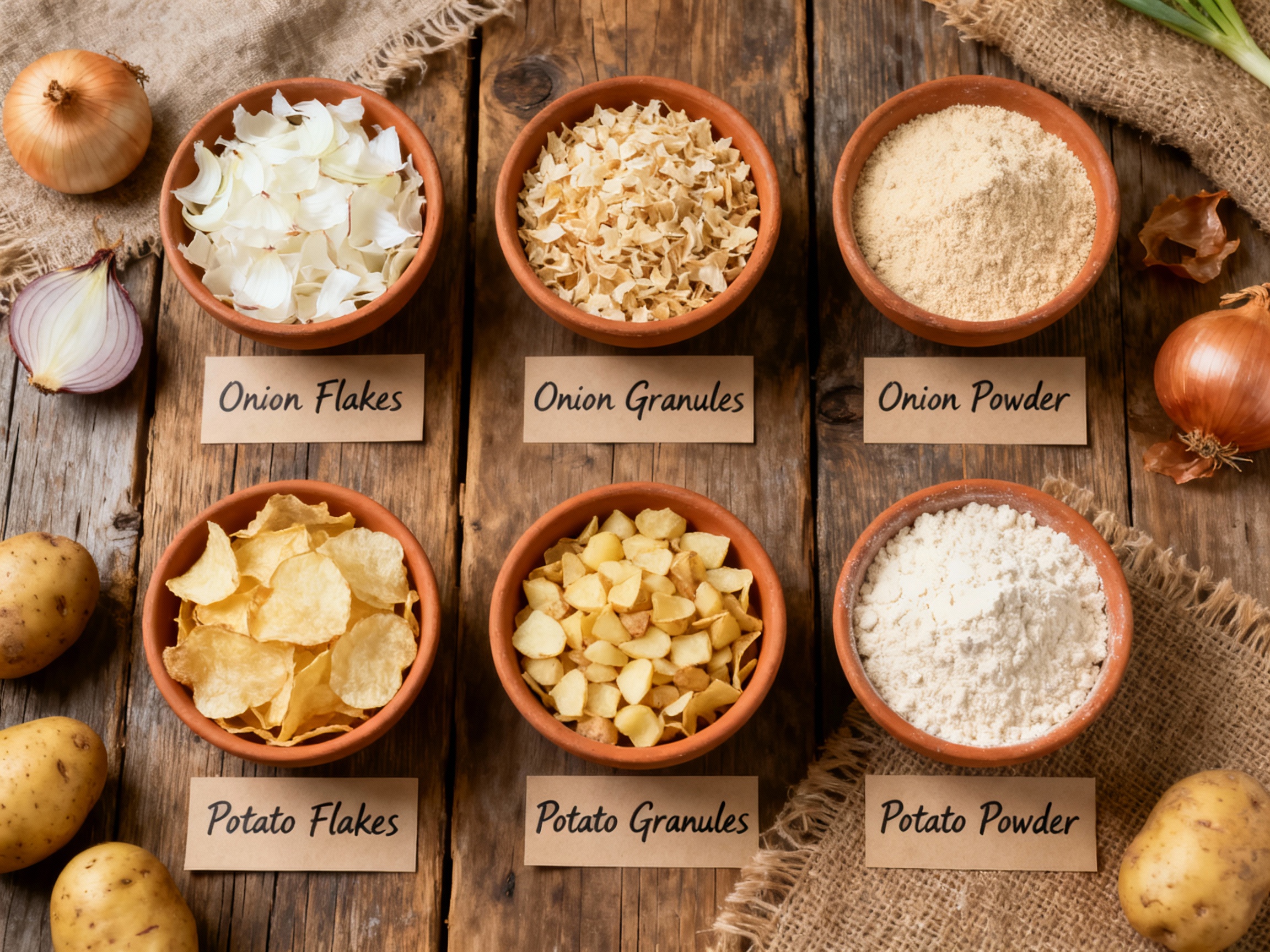
Dehydrated Onion: Fresh onion that has been dried to reduce moisture to around 5–7%, available in ready-to-use forms like flakes, minced, granules, and powder.
Key Comparison: Dehydrated Onion vs Fresh Onion
1. Shelf Life
-
Fresh Onion: Limited shelf life; prone to spoilage, sprouting, and wastage
-
Dehydrated Onion: Long shelf life (up to 12–24 months) without refrigeration
Dehydrated onion offers a significant advantage in long-term storage and inventory management.
2. Cost Efficiency
-
Fresh Onion: Includes additional costs such as labor (peeling, cutting), storage losses, and transportation
-
Dehydrated Onion: Reduces overall costs due to minimal waste, no preparation requirements, and lower logistics expenses
For large-scale operations, dehydrated onion proves more economical over time.
3. Convenience & Processing Time
-
Fresh Onion: Requires washing, peeling, and chopping, which increases preparation time
-
Dehydrated Onion: Ready-to-use and significantly reduces processing time
This makes dehydrated onion ideal for improving production efficiency.
4. Consistency in Quality
-
Fresh Onion: Quality varies depending on season, origin, and storage conditions
-
Dehydrated Onion: Offers uniform flavor, color, and texture across batches
Consistency is essential for maintaining standardized product quality in food manufacturing.
5. Storage & Transportation
-
Fresh Onion: Requires larger storage space and controlled conditions
-
Dehydrated Onion: Compact, lightweight, and easy to store without refrigeration
Dehydrated onion simplifies logistics and reduces storage challenges.
6. Flavor and Performance
-
Fresh Onion: Provides a strong natural flavor, suitable for fresh cooking applications
-
Dehydrated Onion: Retains flavor effectively and performs consistently in processed foods
The choice depends on the specific application and desired outcome.
7. Food Safety & Hygiene
-
Fresh Onion: Requires careful handling to avoid contamination
-
Dehydrated Onion: Lower moisture content helps reduce microbial growth and improves safety
This makes dehydrated onion a more controlled and reliable ingredient in industrial use.
When to Use Fresh Onion
Fresh onion is suitable for:
-
Fresh cooking applications
-
Restaurants and households
-
Dishes where texture and raw flavor are important
When to Use Dehydrated Onion
Dehydrated onion is ideal for:
-
Food processing industries
-
Ready-to-eat and instant foods
-
Snack seasonings and spice blends
-
Large-scale manufacturing
Conclusion
Both fresh and dehydrated onion have their own advantages depending on the application. However, for food processing industries, dehydrated onion offers clear benefits in terms of shelf life, efficiency, consistency, and cost management.
For manufacturers aiming to scale operations and maintain uniform product quality, dehydrated onion remains a highly practical and reliable choice.


Share This Blog